
The General’s Restaurant
The SympathizerThe restaurant begins as an exile livelihood and becomes a public meeting place and secret source of support for the General’s movement.
increasing Bearing strength in each event
 decreasing
Bearing strength in each eventdecreasingA Household Under Pressure

A Household Under Pressure
Madame’s Workload
Madame manages the children, rent, food, and household chores while the General remains unemployed and resentful. The division of labor that once depended on servants can no longer be maintained.
A Marriage Reconfigured
Madame’s practical authority grows as the General becomes a figurehead within his own household. The strain creates pressure to find a source of income and renewed purpose.
Their domestic adjustment prepares the way for a business that will be both economic necessity and political infrastructure.
A Liquor Store Opens
A Liquor Store Opens
A Civilian Business
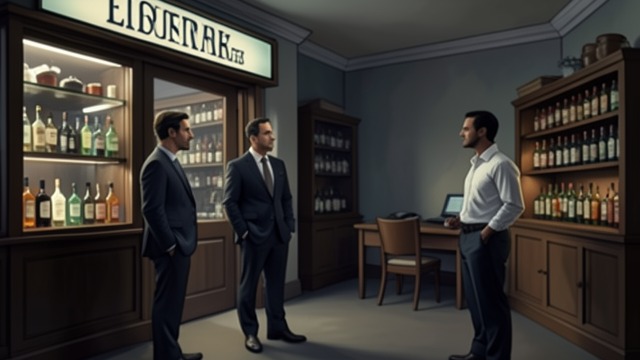
The General opens a liquor store on Hollywood Boulevard and hires Bon as a clerk. The business gives him a public occupation and a place to meet former officers.
A Political Back Room
In the storeroom, the General discusses an informer and directs the narrator toward the Major’s killing. Commercial routine and covert business share the same address.
The store illustrates how exile politics develops inside ordinary economic spaces rather than in formal military headquarters.
Madame’s Restaurant
Madame’s Restaurant
A Taste of Home
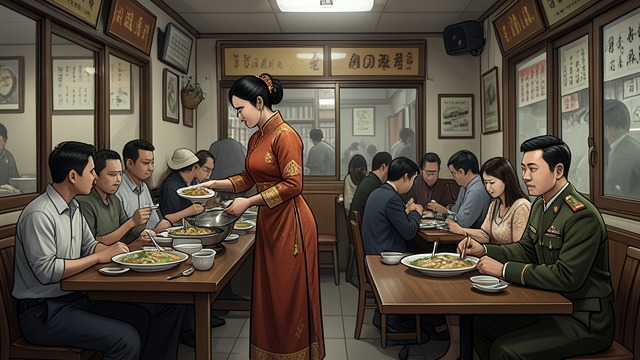
Madame opens a Vietnamese restaurant in Chinatown, and the narrator finds that her pho recalls his mother’s cooking. Refugees fill the tables, seeking familiar food and language.
A Business with Two Purposes
The General says that profits support the Movement. Madame understands that customers may know the political purpose without discussing it openly.
The restaurant offers a real community service while also functioning as a covert resource, linking nourishment to the General’s continuing plans.
A Center for Veterans
A Center for Veterans
Gathering the Dispersed
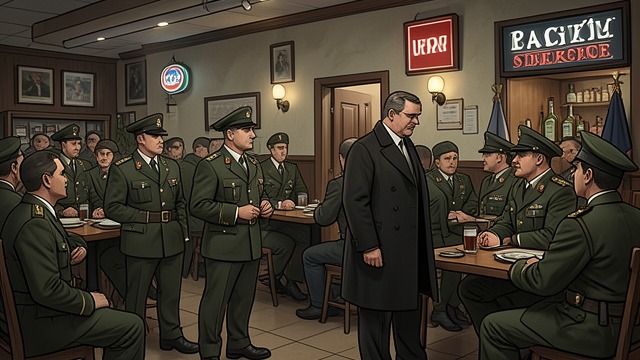
Former soldiers and supporters meet through the General’s business and the veterans’ fraternity. The restaurant and liquor store help sustain social ties among men who have lost their military institutions.
Resentment as Fuel
The General uses those ties to recruit volunteers and renew a collective military identity. The businesses make the movement visible and economically possible while keeping its full purpose partly concealed.
The network gives exiles recognition, but it also makes livelihood inseparable from a renewed commitment to conflict.
The Restaurant Cannot Bring Home Back
The Restaurant Cannot Bring Home Back
Familiar Food, Changed Lives
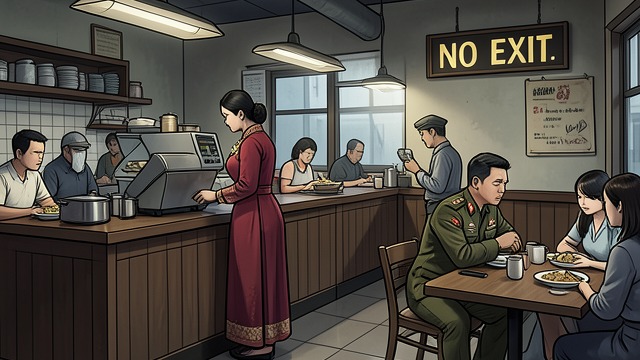
The restaurant gives customers a place to speak Vietnamese and eat food that recalls Saigon. The General and Madame, however, find their new lives far below the status they once held.
A Temporary Foundation
The business supports the movement but cannot restore the old country or its social order. The narrator recognizes that the work’s political purpose may send others toward another dangerous expedition.
The restaurant’s success is therefore double: it sustains displaced people while funding a cause that may prolong their displacement.
The first year after resettlement
One year after the Fall of Saigon
After the narrator returns from the Philippines
During the exile army’s organization
Before the narrator’s return to Vietnam
